
Fiona Apple Writes Like Nobody Is Watching
/Fiona Apple is a poet who chose music as her stage: her lyrics land like compact, fierce poems with precise images, surprising syntax and a voice that reshaped what modern songwriting could hold.

PHOTO BY JIM COOPER, 2005
Fiona Apple and the Art of Writing Feelings That Bite
Fiona Apple has never been the kind of artist who tiptoes into a room. She arrives with a notebook, a piano, and enough emotional voltage to short circuit the average love song. Although she is often praised for her unmistakable voice and inventive production choices, Apple is a writer above all else. Her lyrics behave the way good literature does. They twist away from predictability, they refuse to flatter the listener, and they are more interested in emotional truth than pretty packaging. Listening to Fiona Apple feels like reading someone’s secret journal while they look you in the eye and dare you to keep going.
Apple’s writing life began before her recording career did. In interviews with publications such as The New Yorker and Pitchfork, she has described her childhood habit of writing long, unsent letters to her parents whenever she felt overwhelmed. She later joked that this was her first real training as a songwriter. “Tidal”, her debut album, carries that diaristic instinct. On tracks like “Never Is the Promise,” she folds full sentences into melody and lets her thoughts spill at their natural pace. The effect is poetic without being precious. You get the sense that she is not trying to impress anyone with vocabulary flourishes. She is simply giving shape to the churn of feeling inside her.
The Evolution of Her Writing

photo by CHRIS CANOLE/Getty Images, 1998
By the time she released “When the Pawn…” in 1999, Apple had cemented her identity as a writer who treats language like a full body sport. Critics at Rolling Stone noted that her lyrics were sharper and more self aware than those of most artists her age, calling her a “spiritual sister to the angst-ridden rap-metal of Korn and Limp Bizkit.” The infamous ninety word album title began as a poem that Apple wrote in response to industry criticism. It reads like the manifesto of someone who has discovered that survival sometimes requires intellect and imagination more than brute force. It also announced something important. Apple was not merely singing about emotional struggle. She was interrogating it. She was shaping it into argument and story.
Her writing evolved again with the 2012 album “The Idler Wheel…”, which Pitchfork praised for its creativity and emotional force. The songs on this record feel like thoughts caught in mid air. There is no attempt to hide behind metaphor. Instead, she writes with a kind of hyper present honesty that borders on uncomfortable. Apple has said that many of the songs began as pages of unfiltered text before they became music. You can hear that approach in tracks like “Every Single Night.” The song rises and falls in a series of admissions about anxiety and self doubt. Apple treats vulnerability not as something to soften or disguise but as something with its own rhythm and momentum.
Fetch the Bolt Cutters and the Power of Raw Truth
That approach reached a new peak with “Fetch the Bolt Cutters” in 2020. Critics at The New Yorker and The Ringer described the album as one of the most original uses of language in modern music. Apple recorded much of it at home and allowed real life to slip into the sound. Dogs bark in the background. Percussion comes from household objects. Her voice cracks or deepens or jumps whenever the feeling leads her there.
The lyrics are blunt, funny, furious, tender, and often all within the same track. In “Shameika,” she remembers a classmate who once encouraged her, a moment highlighted in several reviews including The Ringer. In “Ladies,” she dismantles the myth of competition between women with a tone that is half heartache and half sly grin. In the title track she delivers one of her simplest and most powerful lines: “Fetch the bolt cutters. I have been in here too long.” It is a prison break disguised as a pop chorus. It works because it sounds like something she needed to write as much as sing.

Fiona Apple performs during a Z100 Jingle Ball concert on December 9, 1997 at Madison Square Garden in New York, New York. (Photo By Larry Busacca/Getty Images)
Why Her Writing Matters
Fiona Apple matters as a writer because she refuses to make emotion easy. In a music world that often rewards vague confession and tidy resolution, Apple leans into complication. She writes about desire that contradicts itself and anger that refuses to cool down. She writes about pain that does not teach a neat lesson. Her songs remind listeners that language can capture the ugly, thrilling mess of being alive if the writer is brave enough to let it.
Most artists give us songs. Fiona Apple gives us literature that happens to have a melody. Her work proves that music can still surprise us, still unsettle us, and still push us toward insight rather than escape. If songwriting is an art, then Apple practices it like a craftsperson who knows the value of a word placed exactly right. And if feelings were furniture, she would be the writer who takes them apart just to see how they work, then rebuilds them with sharper edges and better joints.
Listening to Fiona Apple is never passive. You read her as much as you hear her. You feel her language settle into the corners of your mind and rearrange whatever was already there. You leave her work feeling a little more awake than before.
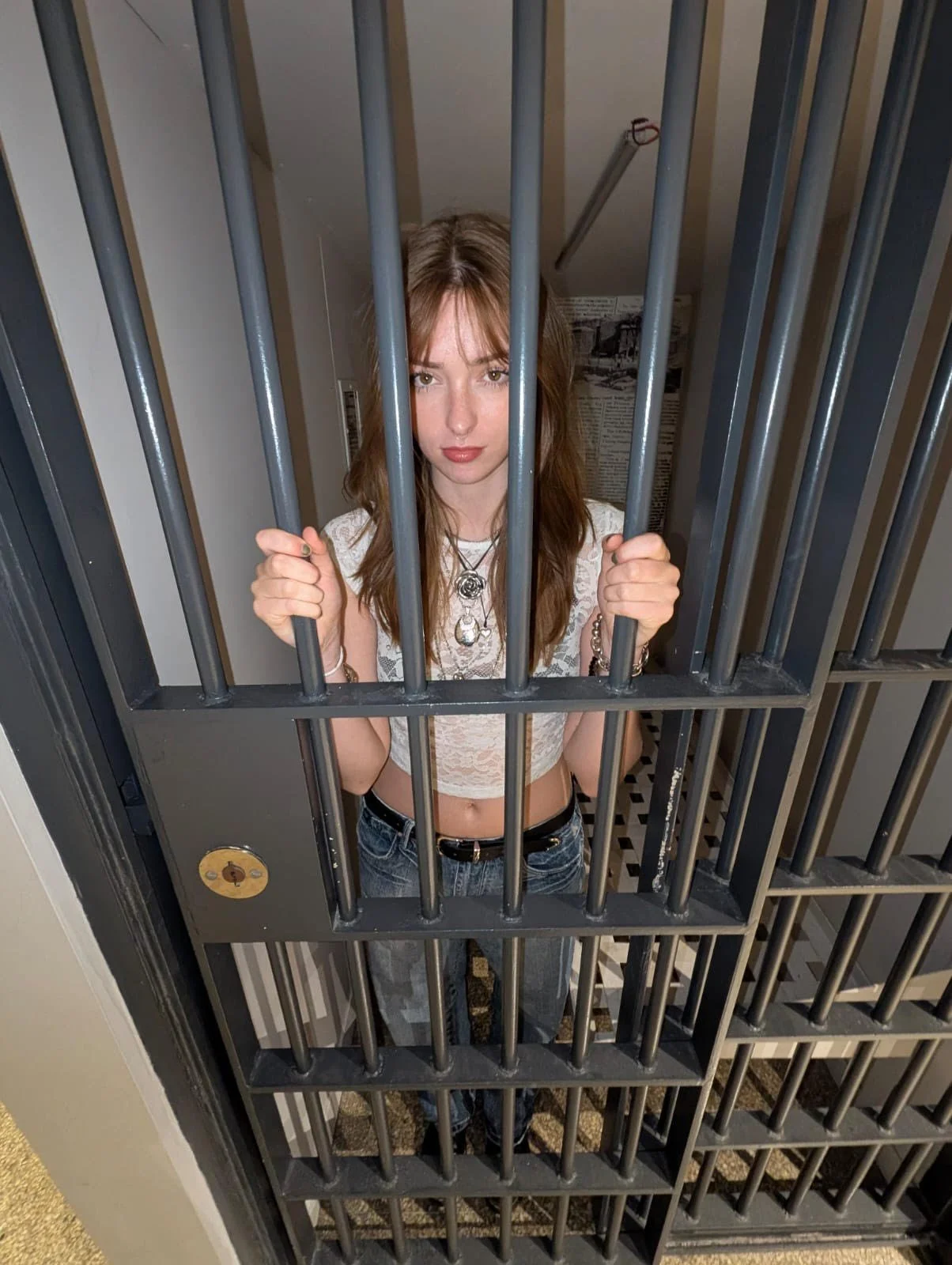
sam at a concert in downtown ottawa
Sam Walt is a writer who loves turning complex ideas into engaging stories. Drawn to science fiction, dystopian worlds and genres that challenge imagination and society, Sam studies Professional Writing at Algonquin College. With a growing focus on the work of female authors, Sam combines technical skill with literary insight. When not writing or editing, you’ll find Sam thrifting for treasures, catching live music or tending to a small jungle of houseplants—always chasing good stories and good tunes.