

Worldbuilding in Action
/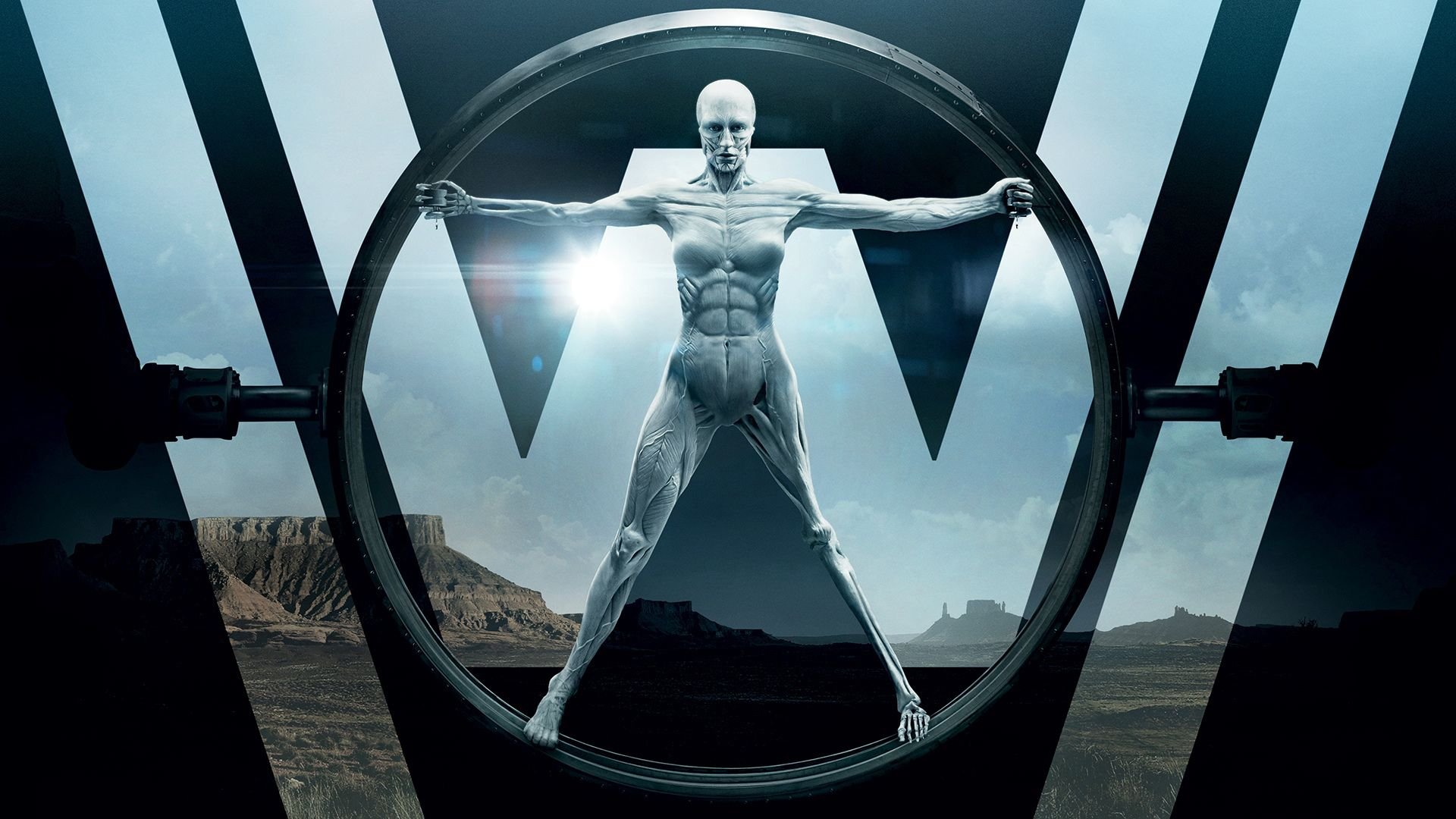
westworld title image
Now we’ll be taking the various elements of our worldbuilding advice and putting them into action, using examples from the 2016-2022 television series Westworld. The creators of this series, Jonathan Nolan and Lisa Joy, base a lot of their ideas on the 1973 film, Westworld, written and directed by Michael Crichton. However, the creations they present to audiences throughout the show’s five seasons are exemplary models of worldbuilding principles. The worlds that are brought to life in this series demonstrate a keen attention to sensory experience, background characters, time and place, and details.
A wide variety of environments set the stage for the characters of Westworld. The story spans multiple decades, from 2012-2084, but a lot of the action takes place around 2053. Two scientists, working with investors and corporations have created a massive life-like park called Westworld. This park requires huge amounts of capital and manpower to build and maintain; the environment is almost indistinguishable from real life, except many of its inhabitants are machines called hosts, who are made to resemble and act like humans. In the first season, the park is modelled on a Wild West theme, and hosts are built to resemble cowboys and Indians. These background characters set the tone for the first season of Westworld, and the first season establishes most of its stories in that Wild West setting, even though the real time and place is set in a futurized world of cityscapes and advanced technologies.
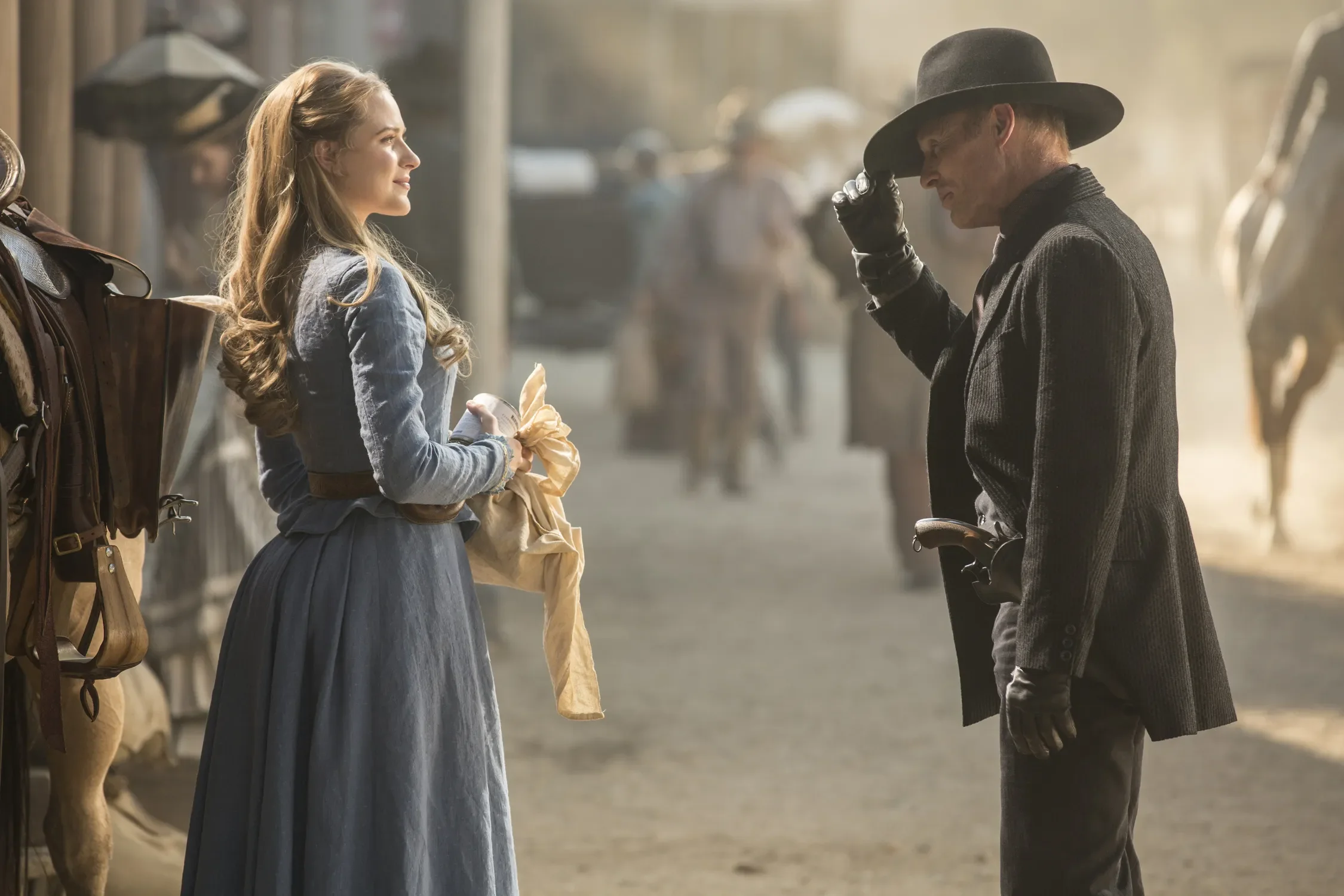
a polite greeting between Delores and william during the american civil war
The environments created for this series immerse the characters and audience in a variety of eras throughout world history. The Wild West setting of seasons one and two takes place during the American Civil War of the 1860’s. During the second season, characters are transported to the Edo period, between 1603-1868, in Japan. Hosts in this part of the story are made to resemble and act like people who lived during that time-period; the characters speak Japanese and battles rage between gunslingers from the Wild-West and samurais wielding deadly swords. In season three, we are introduced to another era, where the characters of Westworld battle Nazi forces in World War Ⅱ Italy. These three historical settings of the American Civil War, Japan during the Edo period, and World War Ⅱ Italy all take place inside the life-like park environments of Westworld. Most of the background characters in these parks are hosts, but there are also humans from the real world, a futuristic version of Earth, who pay large sums of money to experience adventures in the parks of Westworld. The last season of Westworld mostly takes place in that futuristic version of Earth which is populated by humans, advanced robots, and a small number of hosts who have escaped from the parks where they were originally conceived.
Audiences are transported to all these different environments of Westworld through a fully immersive sensory experience. The sights, sounds, flavors, and smells of the Wild West seem to jump out at us when the characters are inhabiting that time-period, and then we are instantly transported to future cityscapes, and Edo period Japan. All these settings are brought to life with a keen attention to details during each time-period. The background characters, humans and hosts, mimic each of the settings perfectly, with their mannerisms, dress, and language.
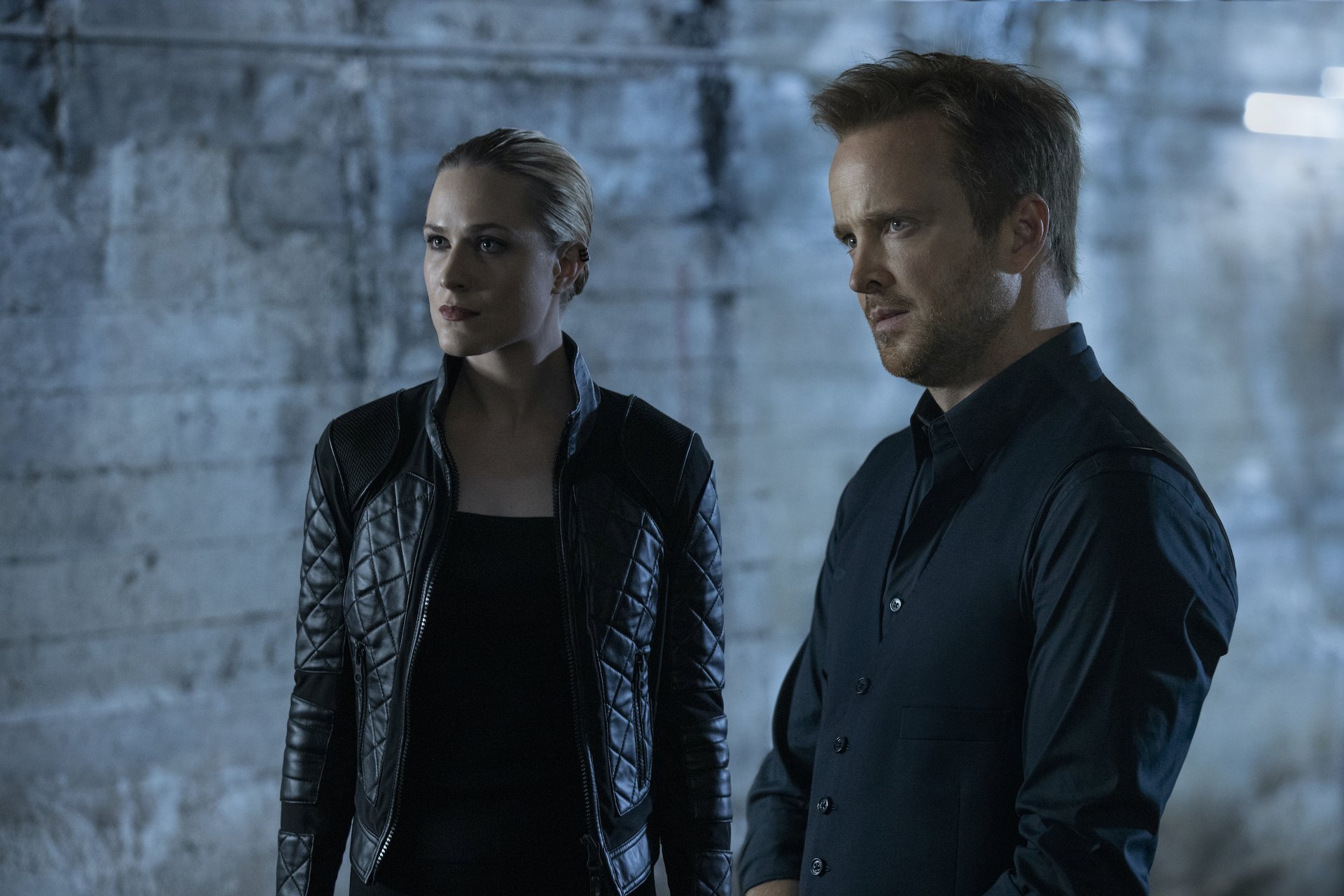
Delores and caleb in the real world, a futuristic depiction of earth populated with humans and advanced technologies
It's rare I spend my time watching television or films; I consider these mediums (mostly) a form of mindless entertainment. But I’ve always been fascinated by science fiction stories, and more recently I’ve spent a lot of time learning about history and philosophy. Westworld was the last series I watched before transitioning to reading books during my free time. The show is a great segue to thinking about deeper philosophical questions – the meaning of human history and the nature of technological progress. And most relevant to this project, Westworld is the perfect example of worldbuilding in action because it exemplifies the principles discussed during our worldbuilding research.

Ryan is a writer who spends much of his free time reading; he especially enjoys philosophy and understanding the link between technology, mind, and culture. He teaches yoga and enjoys being physically active. Ryan has a degree in psychology and is working towards a diploma in professional writing. Ryan recently became a father for the first time.