The Infantilization of Women

Beautiful, smooth, youthful. Just like a little girl. These are the standards that women are held up to in both media and reality.
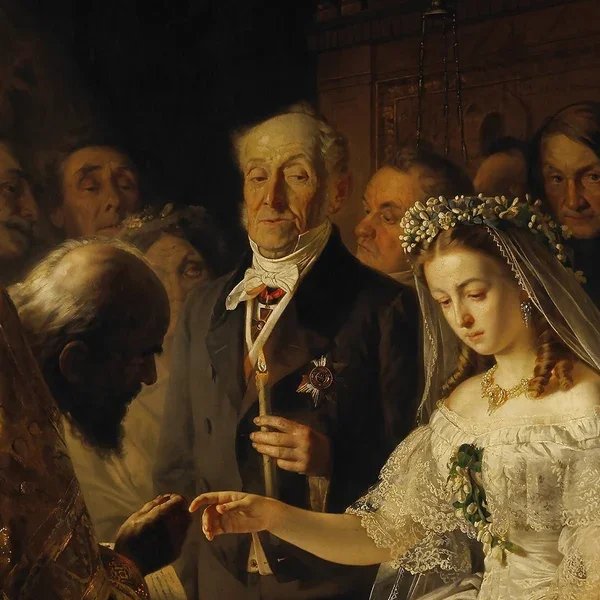
"The Unequal Marriage" by Vladimirovich Pukirev. Depicts a young girl being married to an elderly man.

Painting by Vladimirovich Pukirev, “The Unequal marriage”

When we look back in time, we can observe how the sexualization of young girls has been prevalent for longer than we started addressing it. Children being in relationships with older men during the ancient Greek era was normalized, and we can see multiple counts of young people still being preyed on as years passed. Think of your favourite old author, how likely is it that they had a child lover? Probably highly. Unfortunately, that’s just how it is.

Due to these pre-established expectations, women have always been the victim of something called infantilization, where they are expected to look and younger to appeal to men. Back in the Victorian era, women were expected to “[...] refrain from mentioning anything relating to sexuality and were expected to repress their sexualities,” as said by the Bodhi International Journal of Research in Humanities. This was due to the glorification of women's innocence, the standard of women needing to be pure and almost childlike, or else they’re seen as unworthy and unladylike.

Expectations About Women’s Bodies

This does not just apply to how women are expected to act, but also how they are expected to look. A notorious argument regards puberty and body hair. When women start to grow hair on their bodies, it is seen as gross and unhygienic. This seems to only be the case with women though, as body hair on men is seen as desirable and manly.

Why are women held to a different standard? Why is a natural part of growing up seen as something unwomanly? Most importantly, why are women expected to not grow up? It’s because of the constant sexualization of their bodies that has been pre-established, the expectation to remain a child forever.

“Born Sexy Yesterday”

Now, how does this apply to the literature and media we consume? There are different ways this issue shows up in the media, but I will discuss the obvious; the “Born Sexy Yesterday” trope. This trope involves a female character that is naive, dumb, and ignorant to her surroundings.

This woman may be a different species altogether, but she also could just be another human being. Sometimes, she’s a woman from another culture, which is an even worse stereotype. Usually, this woman is paired with a man who teaches her how to live, which results in an imbalanced power dynamic between the two.

 In an article by Seriously Photography, Nicco Valenzuela elaborates on why this trope is appealing to men. He shares how men are “[...] often unsatisfied with the women they’ve known or come in contact with. They want a female that isn’t their equal or experienced in sex, relationships, or life in general so they can protect her. When the girl falls into his lap (sometimes literally), he can teach her and groom her to what he thinks is the “ideal” woman.” This trope only enforces the gender expectations we’ve discussed. Sometimes without even knowing, men desire women that act like little girls, except these traits are stuck onto adult women so they can claim that it’s okay.

How Women are Impacted

An image of two pink stuffed animals sitting on a bed.

Photo by karola g on pexels.

In the end, these expectations are only hurting women, and most have been taught to think that this is what makes them ladylike. Women are acting like little girls to feed into this fantasy, and it’s only getting worse. We are seeing women dressed provocatively while also holding teddy bears and wearing their hair in pigtails, making their voices higher, and sometimes even talking like a child would.

It’s become so ingrained in our society that almost every woman has had an experience with it; with someone treating them like they’re incompetent. Even when it seems harmless, it still slowly beats down women until they feel the need to back down. So, the next time you talk to a woman, be careful with your words and really consider how you should be interacting with them, as not all women need constant help.

Emily Crawford is one of the writers involved with Prose and Cons. She is a student at Algonquin College’s Professional Writing program, and has been involved with the writing industry since her youth. Even in kindergarten she has been writing; with that hobby becoming something more as she got older. Nowadays she is still in love with writing, and is even planning on starting up an online shop to start custom writing commissions. The topic of fiction and how it impacts reality is something that interests her, and she’s even done some research on it before entering this group. She hopes to share her knowledge in a meaningful way through this blog.
Damsels Under Duress

A big part of the wonder of Speculative Fiction — such as and including Fantasy and Science Fiction (Sci-Fi) — lies in its ability to reinvent the world around us into a fresh new form. Worlds populated by alien races, filled with advanced technologies and feats of magic. Authors have been reinventing and extrapolating whimsical new environments since our species learned how to make marks on paper. However, a worrying trend in speculative fiction is visible when examined; the fantastical and inventive creativity of speculative fiction is ingrained with a systemic, misogynistic belittling and objectification of women and femme-presenting characters. As a disproportionately male-dominated sphere, the work of depicting a fantastic new world nigh-exclusively includes turning women into fetishized caricatures of the male gaze.

Popular Culture

The trend of character creation in Role-Playing Games (which draw heavily from Speculative Fiction as a core attribute) is a well-documented example of the disparity in treatment between men and women. It’s long been a joke in online communities since the early days of World of Warcraft that, when creating a character, the male options are varying types of hulking monsters while the female options are little more than bland recolours of a generic “pretty lady”. Many of these games are heavily based on championed literary work, sometimes directly. It paints a grim picture of their regard for women when the first opportunity a woman has to identify with these worlds is being trunked into a sexualised body. That’s to say nothing of the host of revealing bikini-armours and excuses for attire they’re stuck with from then on, leaving them running across the open world in high-heeled boots.

Worrying Trends

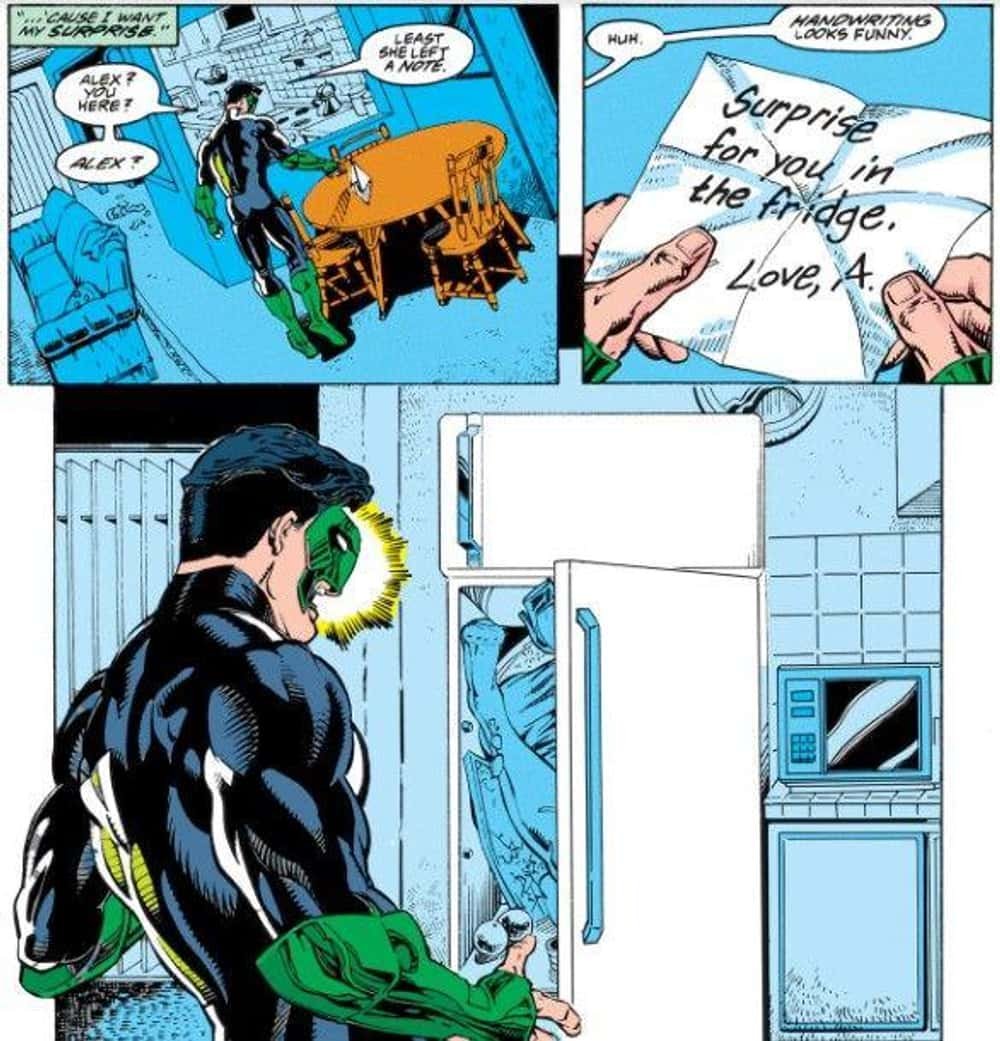
Green Lantern reads a note off a table that reads "Surprise for you in the fridge. Love, A." and is shocked to find a dismembered corpse.

This infamous scene from "Forced Entry", Green Lantern vol. 3 #54 (DC Comics) coined the term “fridging” and inspired Gail Simone’s website.

Since speculative fiction has been around, female characters have been consistently written in a way that undermines their intelligence, independence and contribution to society. Trends point to the only woman in a cast full of men serving as the protagonist’s love interest; women being severely maimed and killed in increasingly brutal ways as a cheap tactic to raise stakes for the male heroes. American writer Gail Simone, author of Bird of Prey among other comics, compiled a list of 100 such occurrences in an address to industry professionals which she later published to its own website. Even women that are depicted as strong and independent in fantastical literature either give up these things over the course of a story or are presented with a persistent air of fetishism. Too often, the term “strong female character” translates from geek-speak as “bi-sexual kung-fu dominatrix”, an image that only further deepens women’s role in fantasy as a commodity.

Real-World

All these patterns reflect the real-world culture that creates speculative fiction and has for quite some time. Isaac Asimov, who I discussed in my first post on this blog, was a staunch liberal and considered himself a feminist even before the women’s rights movement took off. Yet, he has an established track record of sexual harassment against women at conventions. His biographer even attributed this to creating an atmosphere that drove women away from science fiction. There’s little wonder there’s so few women to advocate for themselves in the industry when its best and brightest names, who spend their careers drawing faux supermodels and writing about damsels in distress, are also touching them inappropriately. Between fandom conduct and workplace culture, this industry has been repelling women for nearly a century.

Next Steps

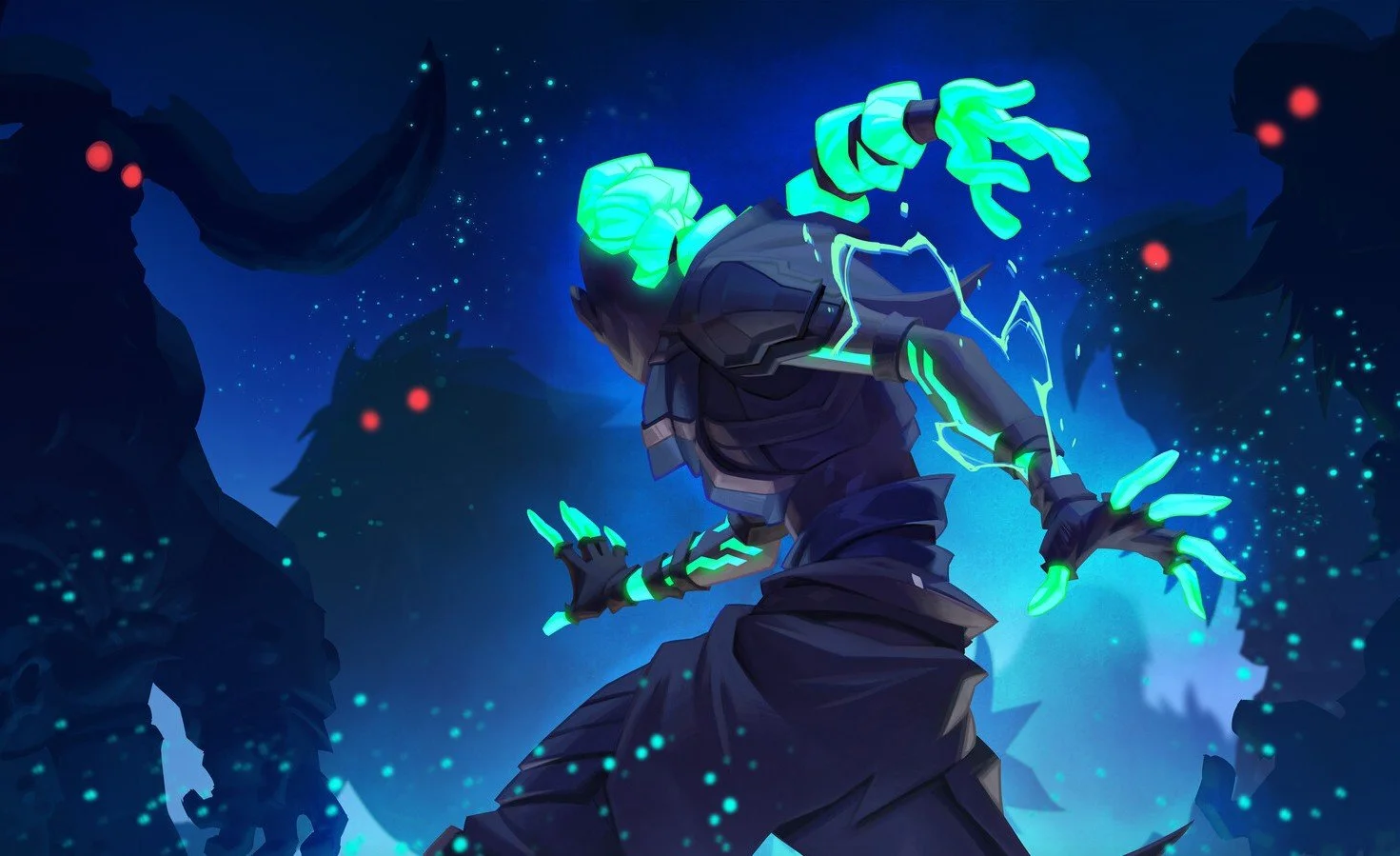
Lora stands with her back to the viewer, facing a group of monsters as her tattoos and hair begin to glow.

Lora (wayfinder) is part of a recent trend of young female characters showing strength through independence. Art by Airship Syndicate.

But none of this to say that progress isn’t being made, as more recent novels, games and other media are featuring modernised and inclusive character design. Animated series like Netflix’s Arcane, video games like Airship Syndicate’s Wayfinder and graphic novels like DC Comic’s Eat. Bang! Kill. Tour miniseries are all stellar examples of Speculative Fiction’s slow cultural improvements.

Ultimately, the best way for women’s representation to improve is to have more women writers involved in this creative sphere. It’s a difficult thing to ask of women, after all the things discussed today, to be enthusiastic about getting involved in the world of speculative fiction, which has for so long made an object of them. That is why the burden lies on men in the industry to work at creating a more inclusive environment. Maybe some of you reading this now are aspiring writers. If so, I encourage you to carefully reconsider your habits and prejudices. Have you ever confused “strong” with “sexy”? have you ever “fridged” a woman for a man’s character development?

Are you sure?


Gaelen Guymer writes expository fantasy books for troubled teens and troubled adults alike. He is currently enrolled in a professional writing program at Algonquin College’s school of media and the arts, located in Ontario, with a specialty in narrative fiction and its influence on the psyche. Before he began writing seriously, Guymer volunteered his time with local Ontario counselling services for 2SLBGTQIA+ youth before turning his experience into literary work.