
Her-Story: Hidden Women Writers from Canada’s Past
/It shouldn’t come as a surprise to know that the literary industry has historically been more supportive of male authors. From prejudiced publishers to scornful critics, women have long been discounted and discredited throughout the publishing process.
But Canada is home to some of the biggest female writers in North American history — women whose works have helped to build this country’s literary identity, brick by brick. How did these iconic women make it big in a man’s world? How did they overcome the obstacles they faced by the dozen? For many of Canada’s literary foremothers, their most valuable tool was the ever-elusive nom de plume.
After all, when society tells her that women can’t write, what’s a girl to do but don the costume — or, in this case, the name — of a man to infiltrate the bookshelves of readers around the world?
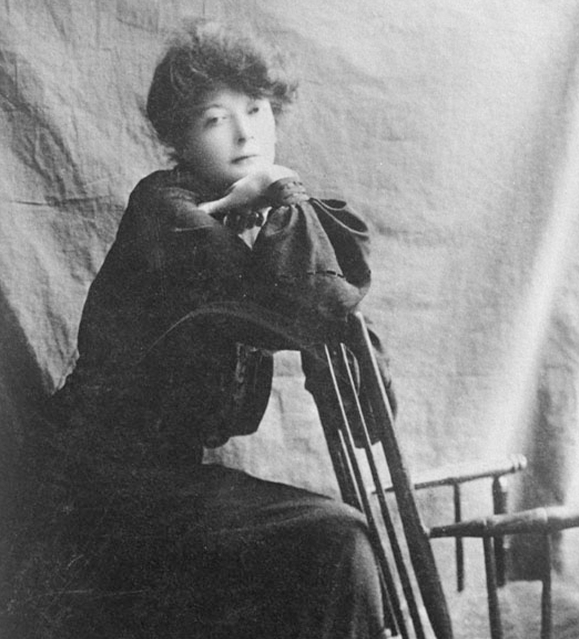
Kathleen “Kit” Coleman | image courtesy of Library and Archives Canada/Kathleen Blake Coleman fonds/a164916
By using either a gender-neutral or male pen name, women were able to achieve a degree of separation from their literary personas. For writers whose work tended more toward political spheres, there truly was a risk to the mortifying ordeal of being known. Speaking up about any kind of “manly” subject (e.g. politics, economics, social activism) was at best an invitation for mass criticism and at worst a request to be ostracized from polite society.
For Kathleen Blake “Kit” Coleman, a prominent female journalist and editor in late 19th century Canada, a pseudonym allowed her to write about whichever topics she so desired without it impacting her personal life. Coleman is also the first woman to have her own section — and later, her own syndicated column — in a Canadian paper She is best known for the work she did during the Spanish-American War, where she reported for Toronto’s Mail and Empire to become the first accredited female war correspondent.
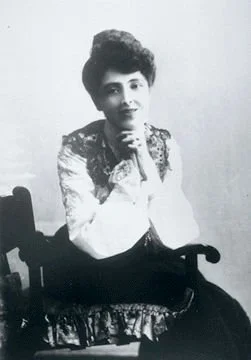
Lucy Maud Montgomery | Image Courtesy of Prince Edward Island Public Archives and Records Office
Activism is not the only reason to use a pseudonym. For many female writers, using a gender-neutral name was less alienating to potential readers. While women could be expected to read works regardless of the author’s gender, many male readers would shun female authors. Thus, a conceivably male name naturally held more appeal to a wider audience and resulted in fewer prejudiced readers judging a book by the author’s name on its cover.
One of Canada’s most beloved examples of this is author Lucy Maud Montgomery. Today, her identity is widely known, but 100 years ago she used L.M. Montgomery, a shortened and gender-neutral version of her own name, to remain anonymous. Throughout her life Montgomery published 20 novels, the first and most well-known of which is the internationally bestselling series Anne of Green Gables. She also wrote more short stories, poems and essays than most of us will read in our entire lives. (Sources differ on exactly how many, but The Canadian Encyclopedia credits her with over 500 pieces of short fiction along with multiple poetry collections and nonfiction anthologies.)
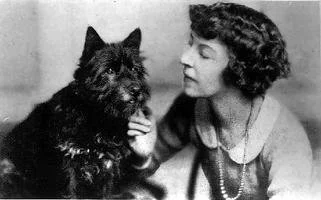
Mazo de la Roche | Image courtesy of Library and Archives Canada/C-5482
A decade or so after Montgomery came to fame, another female author began finding success in the industry. Under the name Mazo de la Roche, Newmarket-native Maisie Louise Roche published 23 novels, over 50 pieces of short fiction and 13 stage plays. In a special publication by the Orillia Museum of Art & History, Board Chair and anthropologist Patricia Crowe-Grande identifies de la Roche as “one of the most prolific writers of her day,” adding that “[t]he only male writer in Canada of comparable stature was [Stephen] Leacock.”
It is impossible to deny the lasting impact these women have had on Canada’s history. Indeed, the Canadian writing community has seen massive growth for the female demographic. As little as five years ago, the Writer’s Union of Canada conducted a survey on nearly 600 of its published authors in the years 2020 and 2021. The report, which was released on their official website, revealed that nearly two-thirds (62.03 per cent) of survey participants identified as women.
While this is certainly a far cry from the female authors who had to pen their works under false names, it is still important to remember women like Coleman, Montgomery and de la Roche. After all, they are the reason that today’s women can publish their writing under whichever name they choose.

photo by benjamin cheer (capital concept media)
Braelyn Cheer has always had a passion for words and the ways they fit together. From the moment she learned how to read, Cheer’s love for the English language and its intricacies drove her to seek growth opportunities in the realm of writing. At the age of 13, Cheer applied for and was accepted to Canterbury High School’s Literary Arts program. There, she was exposed to many different forms of literature, including various genres of fiction, non-fiction, poetry and even songwriting. She graduated with honours in 2021 and is now in her last year of Professional Writing at Algonquin College. Upon graduation, she plans to pursue further education with the goal of becoming an editor.