
The Pursuit of a Good Adaptation
/When Nancy Mitford published The Pursuit of Love in 1945, the tragicomedy was an instant bestseller, and for good reason. It’s difficult to describe the story in a way that does it justice, with its kaleidoscope of fascinating characters and unique blend of absurd humour and human tragedy. Narrated by Fanny Logan, it focuses on her cousin Linda Radlett, the second daughter in a large, sometimes-horrific, always-eccentric aristocratic family. Linda is obsessed with marriage, love, and sex, and marries young — the first in a succession of misadventurous romances. After divorcing her first husband, Tony Kroesig (a wealthy fascist), to marry Christian Talbot (a poor communist), she leaves him before becoming mistress to Fabrice de Sauveterre (a French duke). Though she refuses to admit it, behind her back, everyone else agrees: Linda is just like Fanny’s mother, a serial divorcée known to all as The Bolter.
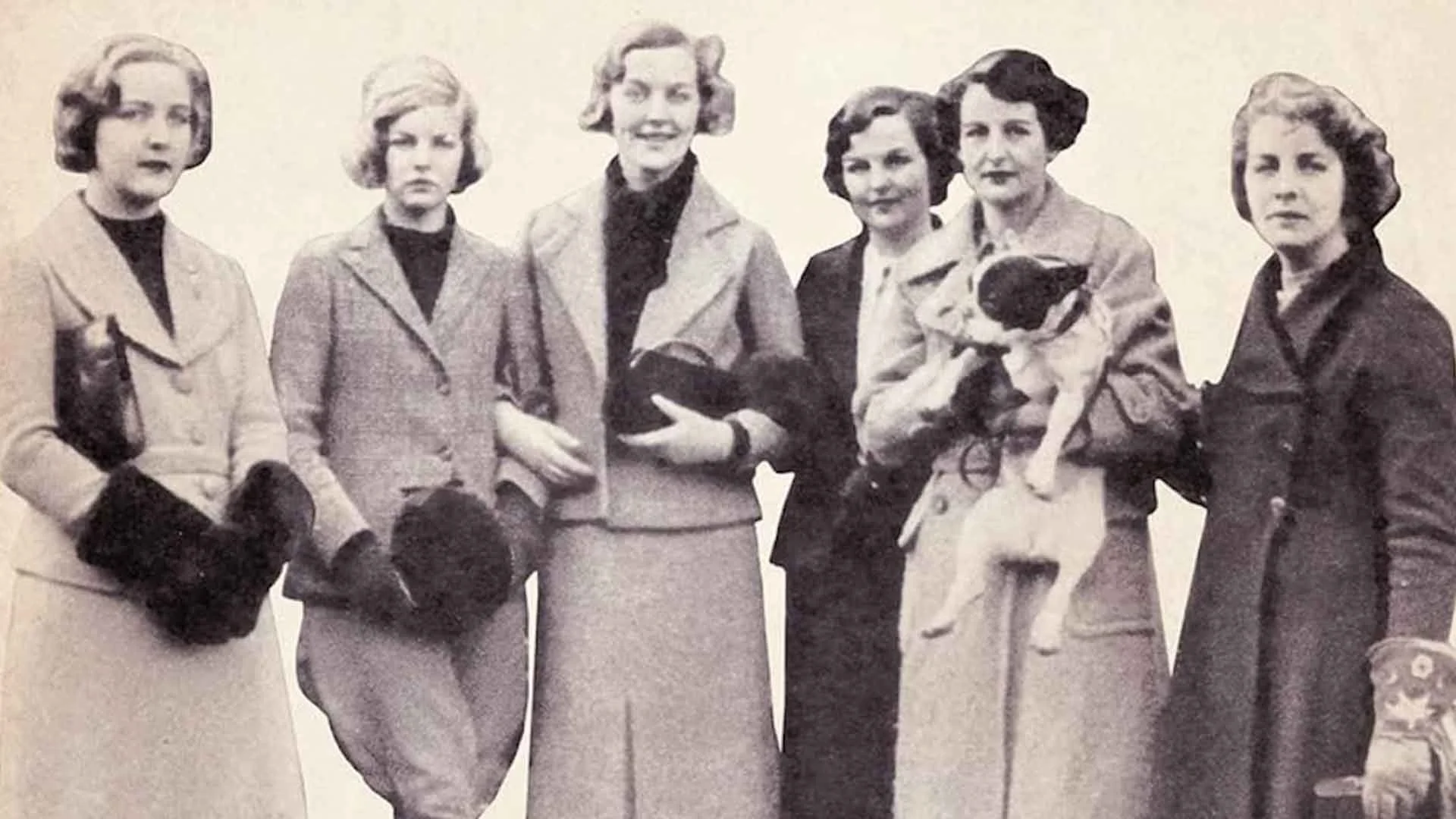
The Mitford sisters: (from left) unity, deborah, diana, jessica, nancy, and pamela.
All in all, the novel is hilarious, tragic, bizarre, heartfelt, and equally as timeless as it is poorly-aged — exactly what you would expect from one of the storied Mitford sisters, for whom the novel serves as something just shy of a biographical novel. Many beats of Linda’s story, from marrying a fascist to getting involved in the Spanish Civil War, were taken from the Mitfords’ own lives.
Pursuit is a surprisingly complex story for such a short novel (the first edition came to less than 200 pages), and packed with interesting characters such as the eccentric Lord Merlin, who dresses his dogs in diamond necklaces, and the girls’ hypochondriac step-uncle Davey. Paired with Mitford’s particular brand of early 20th-century upper class British humour, it’s not necessarily a story that lends itself well to screen adaptation. But if any adaptation has pulled it off, it’s the 2021 BBC/Amazon Prime miniseries. Starring Lily James and written and directed by Emily Mortimer (who also plays The Bolter), the three-episode serial is a deeply faithful recreation of the novel, but incredibly fresh all the same.
Faithfully absurd
The real charm of Mitford’s novel is its tongue-in-cheek absurdity. Pursuit sets every scene and describes every character in great detail, all of it as fantastic as it is mildly to incredibly horrifying. The Radlett siblings, children of Baron Alconleigh and his wife, grow up in a cold Oxfordshire manor house which Fanny calls “as grim and as bare as a barracks.” Lord and Lady Alconleigh have a, ah, unique parenting style: the Radlett daughters are not formally educated, and, among other eccentricities, Lord Alconleigh “had four magnificent bloodhounds, with which he used to hunt his children.” It’s no surprise that Linda turned out the way she did. Her obsession with love and marriage is as much about romance as it is about being loved and escaping her parents’ home.
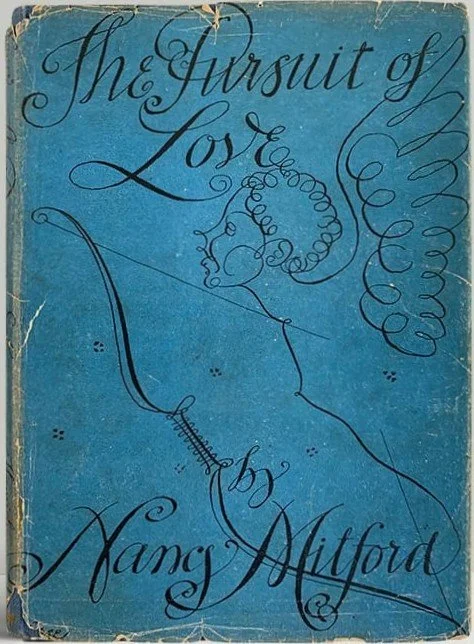
A first edition copy of the pursuit of love.
(Did I mention that Linda’s childhood is based on Mitford’s own?)
Linda is ridiculous, oversensitive and underdisciplined and childish, but earnest and endearing nonetheless. Despite her faults, Fanny loves Linda; even as she does selfish, ill-advised things, you can’t help but love her, too. The story stays funny even in the dark settings wherein Linda finds herself — a bleak refugee camp for those fleeing the Spanish Civil War, Paris on the eve of Nazi invasion, crumbling London in the midst of the Blitz. Irony is abundant, and Mitford uses it well.
With the book already being as entertaining as it is, Emily Mortimer likely saw no reason to mess with success; there’s very little creative licence taken in the miniseries. Many lines and even entire scenes are taken verbatim from the novel. But rather than being boring and unpredictable to those who have read the book, the series is still fresh and exciting. Mortimer kept the story and the characters the same, instead leaning into production to create a fresh but faithful take.
The show uses a modern soundtrack, which includes a mix of pop, rock, and riot grrrl from artists like The Who, New Order, Le Tigre, and Sleater-Kinney mixed with period-appropriate jazz and orchestral music. It’s also immensely colourful — so many period dramas are desaturated to emphasize the setting, but even among dust and rubble, the costumes and set pieces are full of colour. In a way, it offers the viewer some of Linda’s own strange but persistent optimism.
Casting
Linda Radlett is an exercise in extremes, as melancholic and intense as she is childish and free-spirited, and the story follows her from her teenage years to her early 30s — whoever played her would need to be able to manage a thousand contrasting portrayals to play this one woman. Lily James did an incredible job, shifting through all of Linda’s extremes, from 14 to 30-or-so, without inconsistency.
I have no issues with the casting. The only thing I could note is that Fanny has dark hair in the book, while Emily Beecham, who plays her (wonderfully, I might add) has red hair. Who cares?
Irish actor Andrew Scott was a fantastic choice for Lord Merlin, the Radletts’ eccentric neighbour who dresses his whippets in diamond necklaces. John Heffernan was perfect to play the girls’ hypochondriac step-uncle Davey. Dominic West is exactly as hilarious and imposing enough to do Lord Alconleigh justice. Tony and Christian, the Radletts, The Bolter, and the girls’ Aunt Emily — all were exceptionally cast.
Interestingly, two of the love interests in the story were played by nonwhite actors. Linda’s final lover, Fabrice, the wealthy Duke de Sauveterre, was portrayed by French-Moroccan Assaad Bouab, while Alfred Wincham, Fanny’s husband and an Oxford don, is played by Shazad Latif, who is of Pakistani and British heritage. These castings are, to me, a great take on the novel. To be clear, the novel is at times immensely racist, and Mitford’s description of Alfred and Fabrice as “dark,” and of Fanny and Alfred’s sons as “dear little black children” was certainly not meant to imply non-whiteness. But one thing that was decisively excised when adapting the novel was its racism, and I personally think that including people of colour was a solid way to emphasize that move.
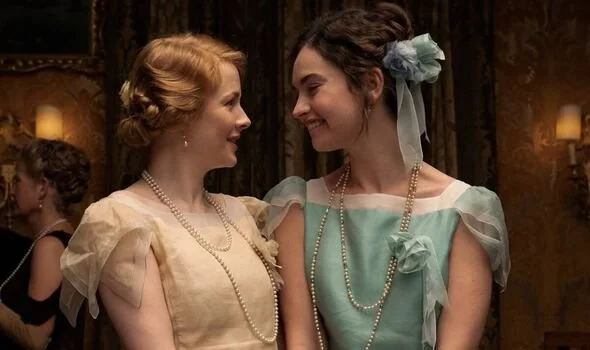
EMILY BEECHAM (LEFT) AS FANNY LOGAN AND LILY JAMES AS LINDA RADLETT.
With its faithful script, colourful production, exceptional cast, and devoted adherence to Nancy Mitford’s particular humour, there’s no doubt to me that the 2021 series is simply a fantastic adaptation of The Pursuit of Love. Emily Mortimer’s script and direction balance the tragedy and humour of the story without losing any of its nuance along the way. While I still think the book is better, if only for Fanny’s internal monologue, I have to say — the soundtrack makes up for it.
Moira Rickett is a freelance editor and translator and a student in the Professional Writing program at Algonquin College. She likes nonfiction writing, literary analysis, and collecting useless trivia, usually about dead historical figures. When not working on her latest project, she can usually be found procrastinating working on her latest project.